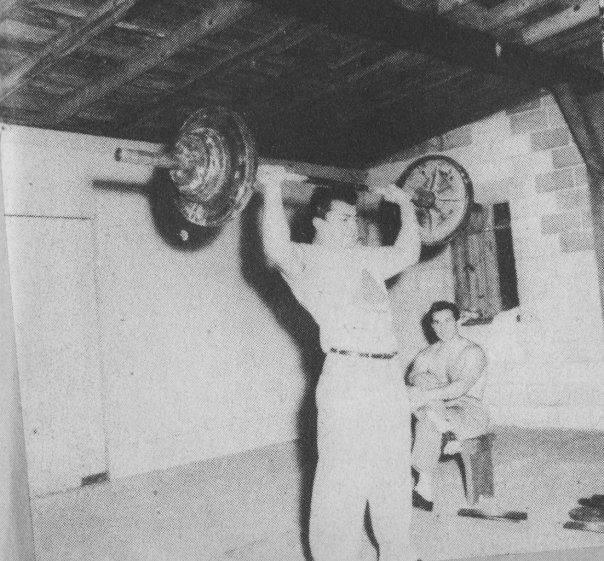
When trying to address the sorry state of affairs in the fitness industry, it's difficult to know where to begin. Do I start with the trainers, most of whom know frighteningly little about basic function and even less about how to get results? Do I point fingers at gym owners or certifying bodies, or those damned infomercials that claim to have discovered the best new apparatus, program or supplement that's going to revolutionize fitness? I think I'd better start with consumers--including the fitness instructors, coaches and trainers, and their clients--who often are just too lazy to question the information that's being presented (YOU know who YOU are, and YOU'RE not as fit as you'd like to be, are you?) because they could all stop this nonsense at once if they just refused to pay premium for an inferior product.
For the sake of ease, I'm going to start with the most recognizable training scenario, the group fitness setting (I'll get to you trainers and coaches soon enough). The problem isn't just that group fitness--and group weight training in particular--must necessarily impose limits on the kinds and the intensity of the exercises performed out of concern for the group's safety, it's that the form of exercise being taught is piss-poor. And the instructors and participants either don't care or can't bring themselves to consider whether someone might have taught them an inferior form of, say, the squat, or the bench press. Nevermind the fact that, in their attempt to make certain exercises safer, they have actually made some of them more harmful.
Let's consider the squat. Sometimes I think that if I see one more quarter or half squat done in a fitness class with little ten-pound pink or green weights, I'm going to start screaming my head off. First of all, people, your legs are the strongest part of your body, and if you think those twenty pounds that you're feverishly quarter-squatting is going to stress your body enough to elicit change, then you're pitifully mistaken. Secondly, it's not functional, and if you ever have to fetch something really heavy off of the ground and squat low enough to get there, you'll see why.
But I know what you're thinking: "Well, my group fitness instructor told me that squatting that deep is bad for my knees!" Folks, right there is the problem with most of the "weekend" fitness certifications that supposedly qualify folks to teach you, the consumer, how to exercise optimally and safely; for the people who teach the certifications and the people who take them know absolutely nothing about the fundamental mechanics of human movement and how it's all kept in balance, truly in balance. Because if they did, they'd recognize claims like the one above for the complete and utter bullshit that they are. It's a myth that I'd like to do away with once and for all, one that's keeping you from getting as strong and as functional as you might be, but as long as everyone involved continues to sell him or herself short, nothing will change.
Teaching others about the optimal form that exercise should take can go a long way, but I've found, more often that not, that people resist change even when there's proof that a better way exists. On that note, and by popular demand, in my next post I'm going to be tackling the safest and most effective method of squatting. Stay tuned...
Sunday, June 29, 2008

Friday, May 30, 2008
A little less talk, a lot more training...
I'll begin this post with an anecdote:
My aunt, God bless her, has never been particularly active, not that I can recall, anyway. She was never an athlete, never one for risk-taking, either. Nevertheless, in her fifties she began to experience shoulder pain, which lead to surgery and even more crippling shoulder pain. A woman who never stressed or strained her body too much, except maybe to clean house here and there, my aunt enjoys even less mobility and function than before.
How is all that possible? Friends, I'm going to share something with you that might come as a shock: our bodies are meant to MOVE and to undergo the stresses and strains of a routine workload, because these are the conditions under which our bodies have evolved, the one's that ensure that they will continue to function well even into our twilight years. They've gotten pretty damn good at it, by the way.
Now, let's consider the case of my great-uncle, by contrast. He's in his eighties now and still remains vital and active. All of his life, he has routinely engaged in mentally and physically demanding work, which has ranged from maintaining a small farm to trapping furs in the wooded areas that surround his house. Recently, he survived a stroke with only some short term memory loss, having regained all motor function in the time since hospitalization. He's strong because his lifestyle demands it.
What I hope you gain from all of this is that, contrary to the hype, stress is good for you. What we have is a culture of pain avoidance made worse by the fact that, for most of us, working entails little to no physical labor. And while my great-uncle now suffers from many aches and pains due to his work, that work has made his late-life independence possible. As I see it, the choice to remain active is a simple one: either we grow old and suffer, never having exercised regularly, or grow old, experience pain, but enjoy more mobility and exhibit a higher late-life work capacity, the fruits of active living.
Tuesday, May 20, 2008
Diet & Nutrition
Much of what I'll cover in this post can be found over at Lyle McDonald's website, Body Recomposition. Lyle has spent a great deal of time combing through research on diet and nutrition so that you and I don't have to.
Research indicates that diets identical in calories will initially result in the same amount of weight loss irrespective of the ratio of fats to carbs to proteins, provided that there is a calorie deficit. However, in the long run those who consume a diet high in protein (for instance, 9 grams for every 20 lbs. of bodyweight) lose more. Likely, this is the case because protein curbs the appetite. Those who don't consume enough protein stay hungrier and begin to make up for the deficit by eating more. In short, more protein is better regardless of the diet that you're on. Now, whether or not you should eat a diet slightly higher in fats or carbs is specific to the individual, and in order to determine which is best, one needs to experiment to decide which percentages of fats vs. carbs make him or her feel the best.
Provided that protein intake is sufficient, one should then address what his or her energy demands are. A deficit of 500 calories daily will result in a pound of weight loss weekly ("deficit" means more calories out than calories in), which translates into 3500 calories a week. Conversely, a surplus of 500 calories daily will result in a pound of weight gain weekly.
In addition, feedings should be spread out across a minimum of six meals a day to ensure that energy levels remain high. Gorging oneself leads to feelings of sluggishness and foggy-headedness because blood is diverted to the stomach and intestines to aid in digestion, not to mention that the corresponding spike in blood sugar leads to the inevitable "crash." Lastly, the collective wisdom of the health and fitness community holds that smaller meals eaten more frequently keep one's metabolism running higher. When the body is nourished in this way, it tends to burn more calories, having been conditioned to expect a steady stream of energy, rather than horde calories in the event of starvation.
Friday, May 16, 2008
Injury
Although we strive to remain injury-free, sometimes injuries do happen, despite proper programming and proper lifting technique. Thankfully, most injuries turn out to be minor and self-limiting, provided that we have programmed and executed our lifts correctly along the way.
In the event of an injury, it is important that you do not cease to train; instead, find exercises that provide a tolerable amount of stress to the affected area without exceeding the rate of healing. When treated this way, an injury, provided that it isn't serious, will heal faster because you provided the stimulus for it to do so. This is the way that your body is meant to function.
Remember, this applies only to minor injuries, the sort that feel okay once you've warmed them up and can comfortably be trained through. Injuries inside or near joints that manifest with sharp and stabbing or even crippling pains, and which may be accompanied by swelling, should never be trained through.
Thursday, May 15, 2008
Strength
As we grow older, our levels of strength and mobility define our quality of life (whether we like it or not). There is no excuse for not developing or maintaining strength--neither age, nor sex, nor race, nor injury, NOR displeasure or discomfort stemming from the thought or practice of training.
When I train my clients, I remain sensitive to the limitations each brings with him or her. Understand that I will never ask any of you to perform exercises that are unsound. Having said this, everyone must accept that training can be unpleasant, life doesn't care that you don't like certain exercises, and that you must, therefore, train in ways that are uncomfortable in order to meet life's demands, or else risk sustaining a truly devastating injury outside of the gym.
If you experience sharp, stabbing pains--the kind which threaten to throw you off kilter--then you should never continue with a given exercise. However, the fact that you are uncomfortable, or that you just don't "like" an exercise, does not fly with me. If you're having difficulty performing an exercise, then you should probably invest time in discovering why this is the case--with my help, of course--so that we can make adjustments and continue to move forward. Always come prepared to do your best and work hard, no excuses.
Subscribe to:
Posts (Atom)