Wednesday, September 30, 2009

I caN Haz Cheezburger now?


As I’ve learned a bit more about the “total picture” regarding weight loss and diet, I’ve refined my recommendations a bit.

During a calorie deficit (in order to experience weight loss, you have to expend more calories than you’re putting in, duh!!), it’s important that protein intake be kept high if for no other reason than that protein has a high satiety vs. carbs, which take longer to create that full feeling we’re after and rapidly lead to feelings of hunger again due to the dramatic spike in insulin and subsequent drop in blood sugar you get from consuming them alone or in large quantities. Protein will also help stave off muscle loss when coupled with (relatively) heavy resistance training in the vicinity of 75-85% of your 1 RM for your lifts. Many sources recommend as much as 1-2 grams of protein per pound of bodyweight, but I think this might be extreme. A gram of protein per pound of bodyweight should do for most people, just to be safe.

To estimate maintenance calories, multiply bodyweight times 14-16 calories. Only use sixteen if you’re highly active, fourteen if you’re less so. In order to generate weight loss, subtract no more than 500 calories daily from this number. As little as 200 to 300 calories will probably be enough. I would rather see a slow and steady weight loss of 1 lb.-1 lb. ½ a week than three-five pounds, due to the tendency for folks who lose weight rapidly to gain it back rapidly.

I say no more than 500 calories less daily because any dramatic change that you subject you’re body to will be perceived by it as a stress. Stress generally is bad when it’s high and unrelenting, and stress leads to a catabolic state (state of breakdown rather than build-up) in which cortisol levels remain high. Elevated cortisol means an increased likelihood for the storage of fat and a stunted ability to enhance and/or maintain muscular bodyweight. That’s why I say no more than a 500-calorie deficit daily.

That last point is important and bears repeating since people tend to think more is better when it comes to calorie restriction. There are several important reasons that this just isn’t the case, one of which I’ve already described. Probably the most important is a little thing called basal calories. Your basal calorie limit is the amount of energy that must be consumed in order for your body to carry on its basic functioning even at rest. If those calories aren’t covered, your body will become even stingier with its fat stores, saving them up for a potential crisis. Since we WANT to lose fat, it is important that we reduce calories ENOUGH while still maintaining calories ABOVE that basal limit.

A second but still important reason to keep calorie restriction moderate is that the psychological toll that too few calories takes is too much for some people. The idea of keeping calories dramatically restricted for an indefinite period is overwhelming. Not to mention there are physiological things that happen within the body separate from the psychology involved that can literally make or break your ability to adhere to a diet for the long-term. Extreme calorie restriction coupled with the wrong attitude can and probably will lead to ravenous, overwhelming hunger at some point. This isn’t just a matter of “willpower” only: the body itself sends out impulses that are difficult to deny in cases like these.

A related but different issue is whether to take a diet break every so often. In light of what I’ve said, you should see why taking a break is recommended if you’re going to adhere to your diet for the long-haul. You can experience “burn-out” from extreme dieting, or from dieting too long without breaks, much as you can when exercising at intensities and/or frequencies too high to sustain for periods long enough to see substantial improvement. In fact, if you want to succeed at reaching your weight-loss goals, I’d recommend taking a one-week break from your diet every couple of months.

This last piece of advice may fall on deaf ears since folks who’ve been overweight forever will fear that a diet break may lead to their adopting old habits again. But I’d encourage everyone to allow reason to be the more powerful voice here over fear. Clear, rational thinking coupled with education about the how and why of diet and nutrition should be encouraged in place of self-doubt. Easier said than done, I know.

On a final note, its common practice for diet and nutrition “gurus” to demonize one macronutrient or the other depending on which sort of diet happens to be en vogue among the self-appointed priests of fitness at the moment. Neither the low-fat/high-carb or the low-or-no-carb/high fat camps have it exactly right as they’d have you believe. Suffice it to say, a moderate approach that includes a balance of fat and carbohydrates will suit the majority of people; putting aside variations between individuals for the moment, a diet with enough fat to help keep you satiated (most of it coming from non-saturated sources) and your cells and intestinal tract healthy and happy on the one hand, and with enough carbs to cover the demands of your daily activities on the other, is key. For the sake of ease, a diet that equally divides the fat and carbohydrate calories left over after protein requirements have been met down the middle will work. This is an oversimplification, since variations between individuals could mean that you feel better on a slightly lower or higher carb diet, depending. Also, individuals who engage in regular, prolonged endurance exercise will need more carbohydrates, with the rest of us needing considerably less.

Finally, let’s consider fiber intake for a moment. Fiber is a carbohydrate, but it functions differently than other carbohydrates and has special ramifications for dieters. One type of fiber when consumed becomes like gel in your stomach, slowing gastric emptying. Slowed gastric emptying means you’ll feel fuller longer. Also, fiber is a high-bulk food: it stretches the stomach with the amount of room that it takes up, signaling to you that you’re full. And like protein and fat, fiber slows the rate at which refined carbs are digested and absorbed and how fast they enter the bloodstream, thus preventing that dreaded insulin spike that grabs the sugar from your blood and leaves you feeling sluggish and hungry again. The upshot of all of this is that when you eat fiber, you eat less of other stuff, get fuller sooner and stay fuller longer. And if you’re trying to lose weight, that’s a good thing.

In short keep protein intake high, take in the correct number of calories (neither too many nor too few), don’t be a fat or carb nazi, and eat lots of fiber-containing ruffage, a.k.a. veggies.

Sunday, September 6, 2009

"Teach a man to fish..."


The following is quoted from Matthew Perryman's ebook Maximum Muscle: the Science Of Intelligent Physique Training. Also, please visit Matthew's website at ampedtraining.com.

“Most research into exercise deals with either aerobic exercise or with rehabilitation. As you might gather, this isn't terribly useful for generalizing into strength-training concepts, let alone something specialized like bodybuilding. Although the West is starting to catch up, a lot of what you read about is actually taken from older Soviet-era information, which, while not bad necessarily, can be hard to corroborate.

Once we start to look at the Western research into actual strength exercise, we start to see a common theme: 'untrained subjects'. Now, in some ways this is good because at least it's done in humans. However we run into some potentially major issues because we've seen it demonstrated repeatedly that an untrained person just doesn't respond the same way as someone with years of experience. Lots of strength-training studies will
demonstrate amazing results in untrained subjects, but comparatively few of them account for this so-called 'newbie effect'. Beginners can get away with lots of things; often they will still improve in spite of what they do, not because of it. When we're trying to establish a cause-and-effect relationship, this can throw a huge wrench into things.

It gets worse. The bulk of the research into the actual biochemistry and physiology is done in rats. While there's a lot of similarities in humans and rats, there's a lot of differences too. There's plenty of examples where things that happened in rats didn't pan out in humans; that's a big weakness.

This is a favorite tactic of the supplement industry, actually. They love taking some rat research or weakly applicable research in humans and then claiming it supports their new magic product. They conveniently ignore the fact that not only is that data not applicable, but they also have exactly nothing showing their claimed results in humans. Besides the claims of the product users, of course - but that's not placebo effect or anything. See also my earlier point about controlling for variables; when you don't perform research in controlled conditions, you can't be sure that your attributed cause is creating the effect. Since giving out free supplements to bodybuilders is almost the definition of 'bias' and 'placebo effect', these testimonials have to be considered highly suspect.

And of course all of these objections can apply just as easily to any workout routine, or any study that looks at strength training.”

Thursday, August 27, 2009

What I know now, part eleventy-four...


There is a better way to get strong and conditioned than CrossFit; Justin Lascek's Wichita Falls Strength and Conditioning program:

Monday — Squat 5x3, Press 5x3, Power Clean 3x5
Tuesday — Chin-ups 3 sets to failure, 10 min. metabolic conditioning routine
Wednesday — OFF
Thursday — Squat 5x3, Bench 5x3, Deadlift 5x1
Friday — 10 min. metabolic conditioning routine

Monday, June 29, 2009

What I know now, part 4 (or what Lyle McDonald knows, and now, I'm passing along to you)


Holy shit, what do you know?! The bodybuilders done gone and got things wrong again!

Turns out that low weight, high rep resistance programs are inferior for maintaining lean mass while on a diet.

Go to Lyle's website and ch-ch-check it out:

http://www.bodyrecomposition.com/category/training/weight-training

Click on "Weight Training for Fat Loss Part 1." Enjoy!

Sunday, April 26, 2009

What I know now, part 3


What I know: AGE IS NO EXCUSE. Too old, too young--doesn't matter.

It's a fact of human existence that people will choose the path of least resistance--i.e. the least fruitful path--if given the opportunity, ALWAYS. I've found that out first hand training folks of all ages and all backgrounds at the gym these last three years. I see it in myself, too, but I try everyday to combat this human trait, and for the most part, I'm winning, I think.

There's always an excuse: "I'm too fat," "I'm too tired," "He or she's too young to be doing that," or "I just don't have the time." And here's my favorite: "I'm too old to be doing that." Bullshit. Absolute fucking bullshit, all of it.

I submit the following videos for your consideration. These are men and women who are well past their primes in lifting. If you see these, and you're not ashamed of yourselves, well, there's no fucking hope for you...

Mark Rippetoe, age 52 (315 lb. back squat x 10):


Phil Anderson, nine months after a double knee replacement:


60 year-old Larry Wallen's 705 lb. deadlift:


60 year-old female powerlifter, with a personal-best squat of 440 lbs. (relevant part starts at about the 0:40 second mark):


I think I've made my point. Happy lifting!

Sunday, February 22, 2009

"What I know now," part two

2. Losing weight is easy. Gaining strength is hard. I intend no disrespect to anyone whose ever had trouble losing weight when I say this. But I’ve attempted to do both, and while I‘ve had mild success with strength and muscle-building, losing weight, on the other hand, just became so damned easy once I’d been at it for a while.

Flashback to the year 1999. I weighed in at a sloppy 200 lbs. And I felt like shit. I’d spend sometimes two to three days at a time hardly moving except to stand up, walk to the refrigerator, grab some food or drink and sit back down. Other times, I’d get up only to walk to the car in order to make my twice weekly pilgrimage to Burger King. At the time, a brisk walk up a hill would leave me exhausted, the blood vessels in my legs throbbing and aching for an at least an hour afterward.

Ahh, poor me, right? The truth was that I didn’t give a damn about myself or others, and every decision that I made revolved around stealing a little pleasure here and there, one bite of food at a time. But the pleasure never lasted.

Really, this lifestyle was just a symptom of a larger problem: I’d had nothing better to do at the time, and no real sense of purpose, or of self-worth. Because if I had, I’d have realized that service to a higher good, whatever your area of expertise or interest, requires one be in the best shape that he can be in, mentally and physically (there‘s no separating them, really). But that’s not what I was thinking at the time. At the time, all I knew was that I looked and felt like shit, and I was pretty sure everyone else around me could see that, too. Around this time, I also went through a pretty traumatic break-up, but instead of resorting to further eating and lying about, I began to exercise in order to deal with the stress. I’d had enough.

I started to lose weight. It was a no-brainer, even for this sack-of-shit. This was before the days of Jared the Subway spokesman, but I’d already come to the conclusion that ordering from a (relatively speaking) “healthy” set of menu items would make portion control and calorie counting easy. It did. And I started to jog a little. At first, I only ran twice a week, and started including some basketball on my days off. Two times a week became three times a week, and the pounds melted off.

Losing weight is easy, especially if you don’t care where the weight comes from. If, for instance, you don’t give a shit if you lose lots of lean muscle tissue along with all the fat, then literally running yourself in circles is about all that you need to do. And cutting your caloric intake helps, also. But the pounds would come off, even if you did nothing else.

Don’t let shows like the Biggest Loser fool you. While the contestants on that show perform exercises that look a little like strength training, because they involve the use of weights and weight machines, the intensity and duration of their workouts (Biggest Loser “workouts” involve high repetitions performed with relatively light weight over several hours a day) will yield a very specific set of physiological responses, resembling what we might expect to see from frequent, prolonged bouts of running, as was my case. In other words, what we have is aerobic exercise (and the worst, most physically abusive kind, at that) masquerading as strength training.

Yes, in the beginning contestants can expect to see some lean muscle gain because they are so tremendously overweight, but after the first month or so, their terrible training practices can only result in one thing: catabolism. When a trainee enters a catabolic state, he or she begins to break down lipids (fats), but if the process continues long enough, muscle protein is then sacrificed as well. Unless the body recovers adequately (and the contestants on the Biggest Loser are NEVER adequately recovered--they can’t be), this process will only continue.

If the body is in a state of catabolism, it CANNOT build lean muscle tissue. But anyway, it wouldn’t really matter if the contestants on Loser were allowed more recovery, because the style of training employed by trainer Gillian is so atrocious, so fundamentally at odds with the proper methods for strength-building--and, therefore, the optimal production of lean body mass (a point I’ve tackled here previously).

Why is lean body mass so important? God, if I only had the time to name all the ways in which enhance strength and muscle mass are important! A physically stronger individual is a better individual. It’s not just the end result--heightened physical strength--that makes this true, but also the way disciplined, rigorous training prepares you mentally for the stresses that you are likely to face everywhere. A heavy set of squats is just hard in a way that walking or running on a treadmill for an hour is not. I’ve never gotten a case of the butterflies from before running, but I have before a heavy set of squats.

And that’s why strength training, true strength training, will never become extremely popular. People will continue to try to find shortcuts to better health and healthier living. They’ll continue to opt for strength training’s less effective and less intimidating cousin, cardiovascular exercise.

Of course, I couldn’t have appreciated all of this back in 1999, if you’d told me. In fact, exercise just became another form of pleasure-seeking, no less pathological than my terrible eating and laziness had been before. I shirked college and work-related responsibilities for the sake of exercise, even neglected loved ones, and I exercised myself to the point of emaciation. I thought I was fit, but I wasn’t. I thought I was happy, but I wasn’t that either. You see, happiness and pleasure have taken on different meanings, as has fitness. Happiness and pleasure on the one hand, like an improved physical appearance on the other, shouldn’t become ends in themselves because these qualities only come around once you’ve plotted a journey and chosen your destination. They’re byproducts, and anyway, they’re only meaningful in the context of this higher purpose: to be a stronger, therefore better, individual, more useful to yourself and to others in general.

Wednesday, February 18, 2009

"What I know now," part one

I’ve been waiting for my thoughts on training to organize themselves around a central theme or two, so that I can write them down and post them here, but, since that’s not apparently going to happen anytime soon, I guess a scattershot approach will have to do.

What I know now:

1. Joe Weider is a crackpot. He is an ass-hat. His magazines and training principles are at the top of the dogshit pile of magazines and misinformation out there that characterizes the majority of information that counts as “knowledge” these days. The Weider Empire, as one might call it, does what it does purely to generate money. Few people realize this, but at the time that Joe Weider first began styling himself “fitness guru extraordinaire,” putting out magazines whose sole purpose was to hock fitness supplements and other merchandise, Weider was busy also hatching a another series of “fitness”-related magazines that catered to gay men with their gay fit-man fantasies. The now extinct League of Decency found out about this and put a stop to Weider’s line of gay mags (see the cover of the magazine, “Adonis,” below), but the external trappings of that cultural time and place in history persist to this day—just look at any bodybuilding competition or any of the dozens of muscle magazines on the shelves currently, where oily, hairless men in bikini underwear pose for (Who else?) other damned men.

Joe Weider and men like him make my job a living hell. The first three months that I spend with any client usually involves disabusing them of all their bullshit notions about training, many of which can be traced to damned Muscle and Fitness Magazine. Let’s take the Weider principle of “muscle confusion,” for example. A search of the Sportdiscus database (an online database containing research papers and articles relating to sports and fitness) yields a number of results on “muscle confusion.” Not coincidentally, those results link to articles taken from none other than Muscle and Fitness magazine. What I’m getting at here is that very little actual research has been conducted on “muscle confusion.” Maybe that’s because the very concept is not easily quantified and measured. I mean, how do you quantify and measure “confusion?” Somebody f**kin’ tell me, okay, because I’m at my wit’s end. Sure, you can observe the results of your “muscle confusion” routine on a person and record that, but how do you know which if any of the variables of the routine made the real difference? How do you know whether some other approach might not have given you the same if not better results? How do you know whether it will work well for all populations or just some, or if it only works on lifters who take steroids or other performance enhancing drugs, since most if not all of your subjects take them?

F**k Joe Weider!

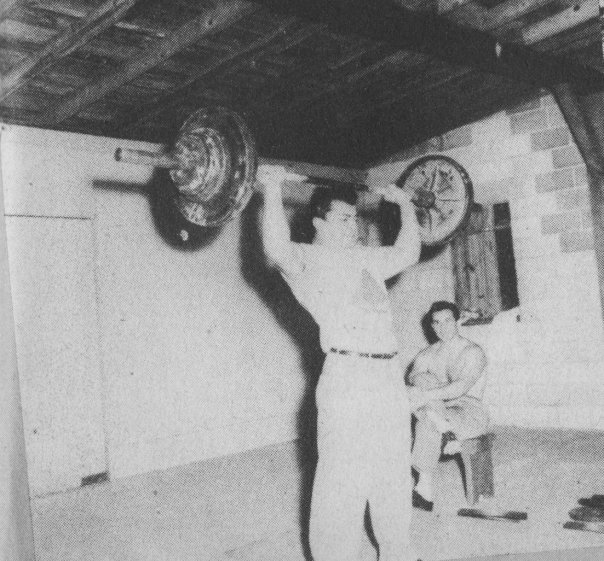
Long before Joe Weider came along there were serious, hardworking men (some women, too, I suppose) who began with a few basic lifts, to which they added weight every workout and saw serious results. These lifters were doing this for many years before Joe Weider came along, and it worked for them. The work was hard and sometimes monotonous, but the rewards were huge. You could find them at York Barbell and in modest little gyms all over the country. They ate good whole food and lots of it, squatted, deadlifted and pressed themselves to incredible size and strength. The problem is, nobody wants to work hard, no one has the focus to stay the course when the lifting program gets tough. If they did, then everybody would be living and dying in the squat rack and everybody would be f**kin’ huge! People still want to believe that a “snake oil” supplement can help them bypass the hard work that a serious, systematic, rigorously applied, and linearly progressed program entails.

Instead, folks would rather subscribe to Muscle and Fitness Magazine and the like, which serves up a buffet of workout routines (routines of the bodybuilding stars, people!) designed to help sell whatever worthless supplement appears on the opposite side pages. What’s more, if magazines were to actually publish would DOES work, then they’d very quickly run out of things to write about in subsequent issues. The truth is that hard work, focus and dedication to a few basic exercises, along with correct eating, will always yield the best results in the beginning. Got it?

Oh yeah, f**k Joe Weider.